
emma@ramabrasives.com
86-13866745375
Many importers and distributors often ask the same question:
“Why do cutting disc prices vary so much between suppliers?”
For a standard 4 inch cutting disc, prices in the market may range from very low-cost products to premium-grade discs.
Understanding the real production cost structure helps buyers evaluate supplier quotes more accurately and avoid extremely low-quality products.
In this article, we break down the main cost components involved in manufacturing a typical resin-bonded cutting disc.
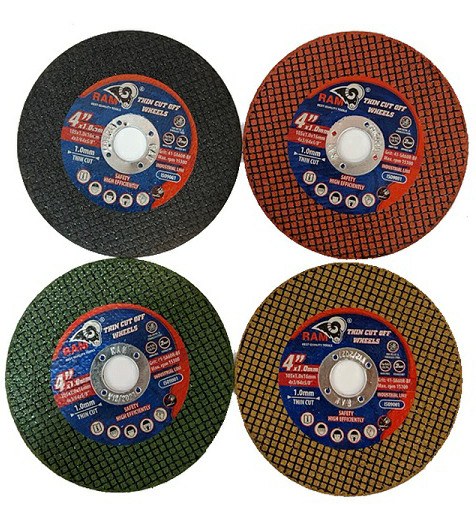
1. Abrasive Grain Cost
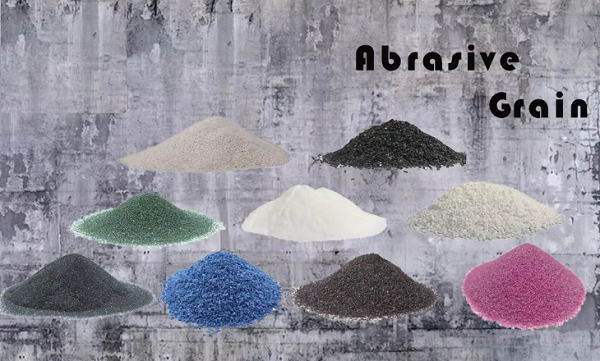
The abrasive grain is the core cutting material of the disc and one of the most important cost factors.
Common types include:
· Brown Aluminum Oxide (A)
· White Aluminum Oxide (WA)
· Zirconia Alumina
Among these, WA and zirconia grains are usually more expensive but offer better cutting performance and lower heat generation.
For many standard cutting discs, abrasive grain cost accounts for around 35–45% of the total production cost.
2. Resin Bond Material
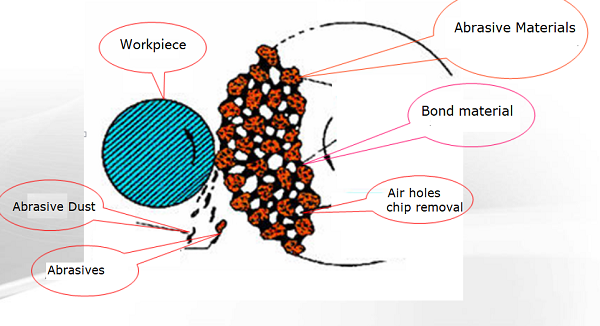
Resin is used to bond abrasive grains together and maintain the disc structure during high-speed rotation.
Most cutting discs use phenolic resin because of its:
· High heat resistance
· Strong bonding strength
· Stable performance under pressure
The resin content usually represents about 10–15% of the production cost.
Low-cost products sometimes reduce resin quality or quantity, which may cause discs to wear faster or become unstable.
3. Fiberglass Reinforcement Mesh
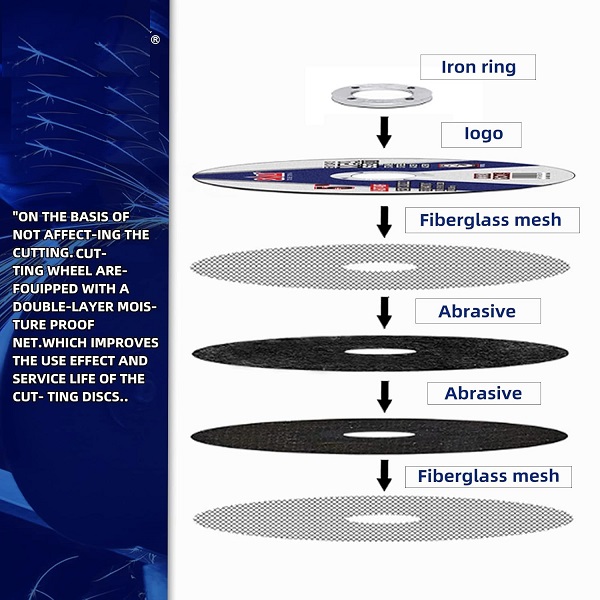
Fiberglass mesh plays a critical safety role in cutting discs.
It reinforces the disc structure and prevents breakage during high-speed rotation.
A typical 4 inch cutting disc may contain two layers of fiberglass mesh.
This component usually contributes 10–12% of the total production cost.
High-quality fiberglass significantly improves disc strength and safety performance.
4. Production Labor and Energy
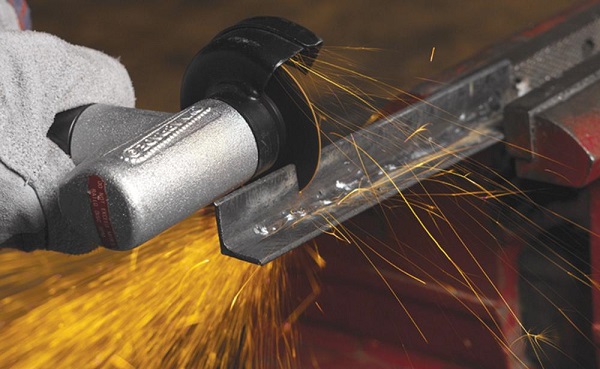
Manufacturing cutting discs involves several production stages:
1. Raw material mixing
2. Molding and pressing
3. Reinforcement layer placement
4. Oven curing process
5. Balance and strength testing
Electricity consumption during oven curing and machine operation is a significant cost factor.
Labor and energy together normally account for 15–20% of the final cost.
5. Packaging Materials
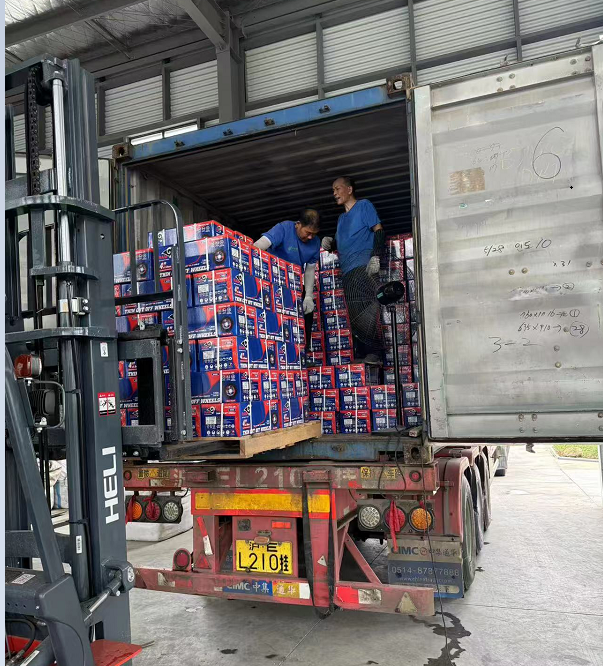
Packaging cost varies depending on the target market.
Common packaging types include:
· Bulk carton packing
· Color box retail packing
· OEM branded packaging
For export orders, packaging usually represents 5–10% of the total production
6. Quality Control and Testing
Professional manufacturers perform several tests before shipping:
Rotating speed test
Balance test
Strength test
These processes ensure that the cutting discs meet safety standards and perform consistently in real working conditions.
Although testing does not represent a large direct cost, it is essential for maintaining product reliability.
7. Estimated Cost Structure Example
Below is a simplified cost breakdown for a typical 4 inch resin bonded cutting disc.
Cost Component | Approximate Share |
Abrasive Grain | 35–45% |
Resin Binder | 10–15% |
Fiberglass Mesh | 10–12% |
Labor & Energy | 15–20% |
Packaging | 5–10% |
Other Costs | 3–5% |
These percentages may vary depending on raw material quality and product specifications.
When buyers see extremely low prices in the market, the difference usually comes from:
· Lower-grade abrasive grain
· Reduced resin content
· Fewer reinforcement layers
· Minimal quality control
While these products may appear attractive in price-sensitive markets, they can lead to faster wear, lower cutting efficiency, and potential safety risks.
For distributors and importers, the goal should not always be the lowest price, but the best balance between price and performance.
A slightly higher-quality cutting disc may:
· Cut faster
· Last longer
· Reduce customer complaints
In many cases, this actually lowers the overall cost for end users.
Understanding the real production cost of a 4 inch cutting disc helps buyers make better sourcing decisions.
Instead of focusing only on the price per piece, importers should evaluate:
· Abrasive material quality
· Reinforcement structure
· Manufacturing consistency
· Supplier reliability
A transparent supplier who can explain the cost structure is often a better long-term partner.
Contact: Emma Wang
Phone: 86-13866745375
E-mail: emma@ramabrasives.com
Whatsapp:+86 18815696540
Add: No.711 Luzhou Avenue,Baohe District,Hefei City,Anhui Province,China
We chat